De ce psihiatrie integrativă?
Psihiatria integrativă este în continuă dezvoltare
peste tot în lume având şi alternative (CAM), în cadrul psihaitriei convenţionale,
bazată pe experimente ştiinţifice ce au ca scop siguranţă şi eficacitate. CAM reprezintă
diagnosticarea tratamentului şi/sau prevenţia care complementează medicina de bază
(primară), contribuind astfel la formarea unui întreg comun, prin satisfacerea unei
cereri care nu este abordată în manieră clasică sau prin diversificarea cadrului
conceptual al medicinei (Ernst et.al., 1995).
Pentru a se încadra în conceptul de bio-psiho-social, indiferent cât de complexe
ar deveni cercetările asupra cauzelor bolilor şi oricâte căi de abordare terapeutică
ar exista, medicina va căuta întotdeauna să îşi păstreze caracterul tridimensional,
complex, corespunzător fiinţei umane.
În această relaţie între formă şi conţinut medicina are şi va avea întotdeauna nevoie
de orice resursă biologică, psihologică şi socială pentru a preveni, elimina sau
compensa cauzele afecţiunilor.
Cu alte cuvinte, toţi factorii care au un rol în menţinerea sănătăţii prin însumarea
selectivă de informaţii, în psihiatrie, sunt egal sau constant coroboraţi cu persoana
care reprezintă unicitatea sa în procesul medical catenar.
Din perspectiva implicaţiilor clinice şi teoretice, conceptul medical bio-psiho-social
are un domeniu mai larg în psihiatrie decât modelul biomedical prin relaţiile sale
interdisciplinare şi reprezintă o reacţie a reducţionismului antipsihiatriei. Integrarea
şi aplicarea acestui model complex poate fi util în rezolvarea problemelor legate
de divizarea execesivă a psihiatriei şi, prin extrapolare, a medicinei ca un întreg.
Psihiatria integrativă urmăreşte, la fel ca şi psihiatria convenţională, principiile
medicinii bazate pe dovezi. Principiile cuprind: a). căutarea celei mai specifice
dovezi ştiinţifice pentru fiecare tratament; b). desfăşurarea tratamentului este
determinată de principiile, preferinţele şi cadrul de referinţă al pacienţilor,
precum şi de c). experienţa şi specializarea terapeutului. (Sackett et.al., 2000).
Dacă urmărim dinamica nosologiei psihiatrice din ultimii ani, putem observa că problemele
tulburărilor mintale reprezintă un subiect cu abordări variate la diferite nivele,
cu toate că se pretinde căutarea unei baze non-teoretice în scopul urmăririi obiectivelor
socio-umanitare.
SCURT ISTORIC
In order to understand the context of the appearance and the foundation of the „Bulletin of Integrative Psychiatry”, a brief overview of the socio-cultural texture of the end of the nineteenth century from the Roman countries is a necessary step…
Under the influence of the historical area of Europe and of the secular and liberal ideas which made their way in the condition of the new social relations in the Romanian Principalities, appear in Moldavia, and especially in Iaşi, a remarkable series of medical publications.
In this manner, on the 11th of January 1830, it is constituted “Cercul ieşean de cetire medicală” / „The circle of medical reading of Iaşi” (Jassyer medizinische Leseviverein or Der medizinsche Leseverein in Jasy) to which adhere 21 participants including: Mihai Zotta, Eustaţiu Rolla, Kiriacopolos, the jurist Anton Winkler and Gh. Asachi, the secretary of the circle being Stanislau Czihac Christian Jacob. The circle hence constituted achieves, through 18 subscriptions to scientific journals from abroad, the information and a new way of communication on the concrete life problems of the society of the time.
At the same time, it is formulated a status project to which other doctors collaborate and through a request to the Government of the country, it is required, at the 2nd of January 1830, the foundation of a „Literal society of doctors and naturalists”.
“Societatea Doftoricească Moldo-Romanika” / „The Moldo-Romanika Medical Society”, which becomes then „The Society of Doctors and Naturalists” of Iaşi obtains the legal approval of the Government on the 18th of March 1833. The society’s status includes a series of generous ideas regarding the foundation of some medical-surgical establishments to stop the falsifying practices in medicine and pharmacy, of organization the change of opinion and scientific information. Along with other provisions, „doctors in medicine and surgery, with degrees/diplomas of confirmation from both Romanian Principalities (Moldavia and Wallachia) may be admitted as extraordinary members”, unlike those from abroad who become correspondents – a suggestive distinction for the evolution of the ideas of national unity.
„The Society of Doctors and Naturalists” maintained the academic ambience of great importance to the medical school from Iaşi, with the uninterrupted interest in science, culture and society. The students in medicine manifest a notable presence through the „Club of student’s of Iaşi University” and, from 1896, through the foundation of the „Society of Students in medicine”, whose tendencies and activities have sometimes been contradictory: in some periods of medical and scientific activity and others, deviated from their mission, by tendencies of segregation, intolerance, tendencies felt also in society.
On this background of animated opinion life and press, appear a series of publications of culture, literature and exchanges of ideas in various fields. As part of these events, we point out, as a medical significance „The Medical Gazette of Iaşi”, published in 1885. From the editorial board took part the professors E. Rizu, G. Botez, V. Negel, G. Socor and E. Riegler. Although the Gazette interrupted its appearance after only 22 numbers, it signalizes the stringent condition to exist „in the interest of science and of the local medical staff”.
In 1893, on the initiative of „St. Spiridon” Epitropy led by A. D. Holban, Eugeniu Ghica Budeşti, Grigore Ghica Deleanu, appears, under the direction of professor G. Socor, the periodical “Analele Casei Spitalelor şi Ospiciilor Sf. Spiridon din Iaşi“/”The Annals of the House of Hospitals and Asylums Sf. Spiridon of Iaşi”. The periodical constituted a genuine tribune for professors of medicine such as: J. Bejan, E. Rizu, G. Botez, V. Negel, G. Bogdan.
Significant data and statistics are recorded on the „ill movement” and also other historical sources of medical value. In these annals there were published researches and contributions of Al. Brăescu, Julian Lukaszewski, as well as various doctoral theses. In this publication also, Dr. Juliano presented the communication „Report on prophylactic Conference against syphilis” held in Brussels in September 1889.
A dimension of the medical and scientific research, designed by a great knowledge and anticipation force is expressed by the foundation of the first „Romanian Society of Neurology, Psychiatry and Endocrinology”. The Society has been founded on the 9th of September 1919 in the „Socola” Hospital on the initiative of seven scientific personalities who announce in their message, among others: the emancipation of the society, the refusal of social discrimination and ignorance.
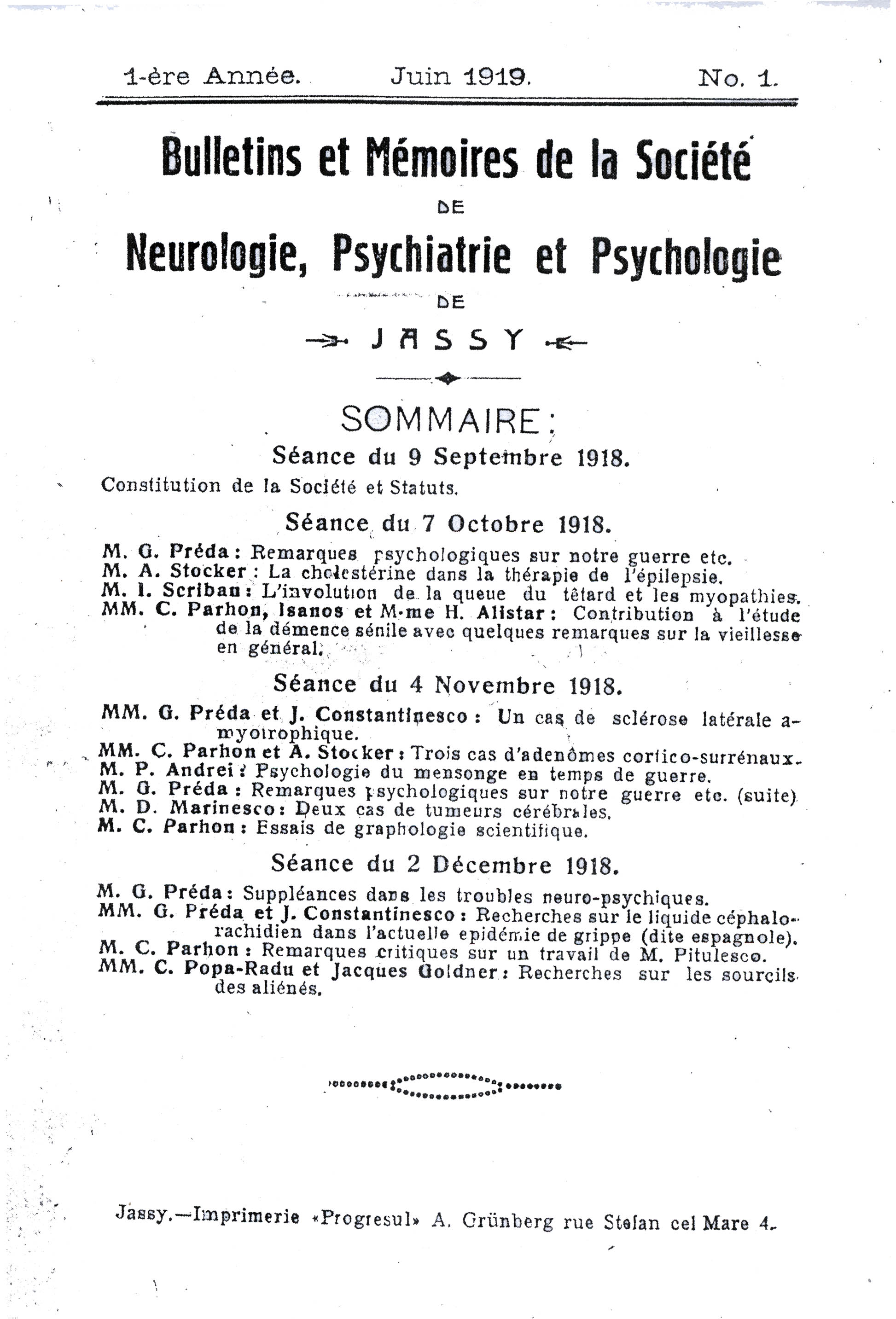
Edited in French, the first number of “Bulletin et Mémoires de la Societeté de Neurologie, Psychiatrie et Psychologie” from June 1919 had a prestigious editorial committee composed of president – Professor Dr. C. I. Parhon, vice presidents – Dr. Gh. Preda and Constantin Fedeleş, PhD in philosophical sciences, secretaries – Dr. Arnold Stocker and Petre Andrei, PhD in philosophical sciences, treasurer Dr. Corneliu Popa-Radu, librarian – I.A. Scriban – PhD in Biology. These eminent personalities, some of whom were not doctors had an elevated culture and scientific information, consistently adhere to the sustainable effort of the promotion of psychiatry and scientific research of the mental health of the population.
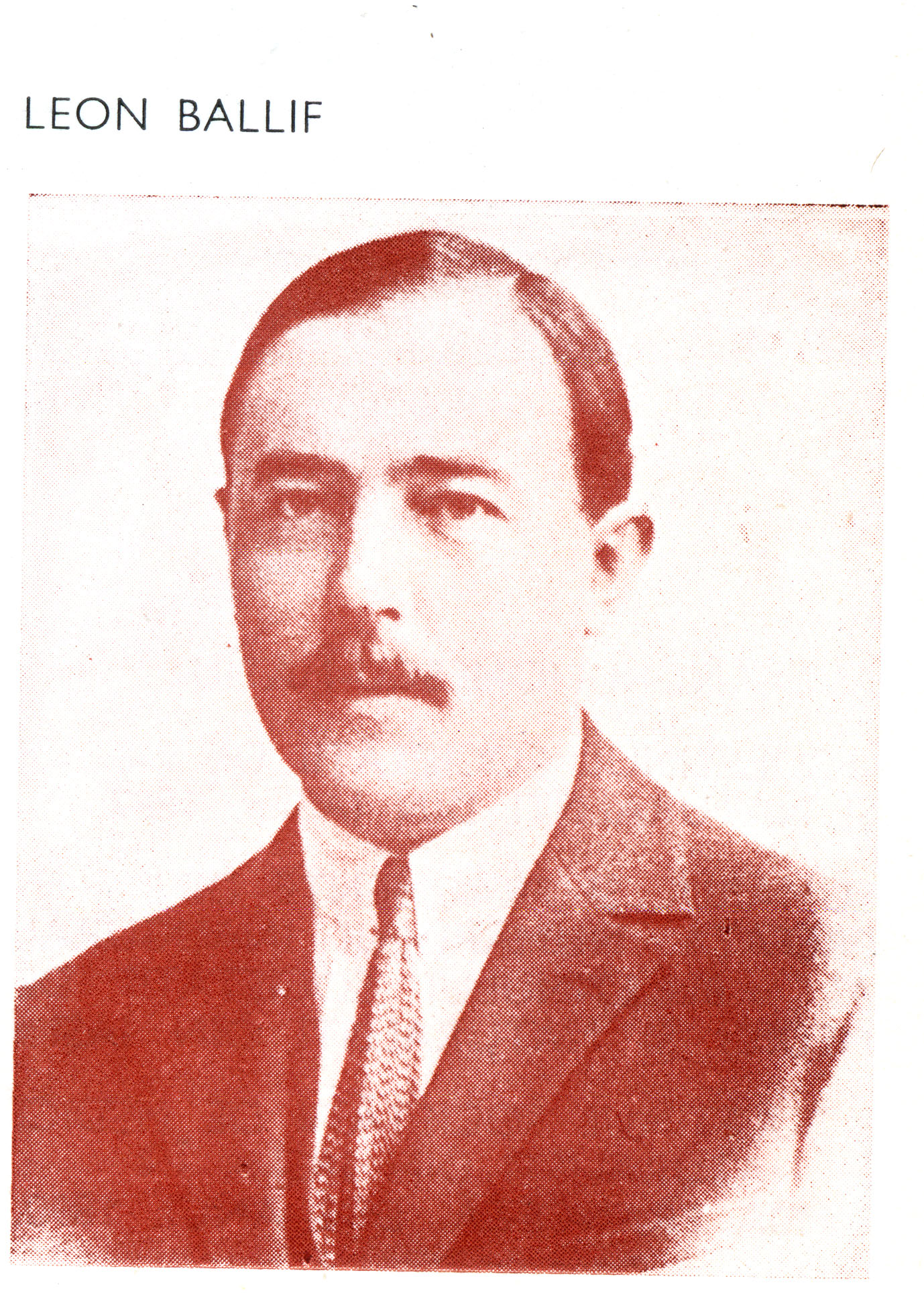
From the period of affirmation of the Society’s bulletin and of the first years of its foundation and functioning, along with those who formed the nucleus of the publication, we find valuable medical names: Leon Ballif, who will then become secretary and finally president, Emil Savini, Charlotte Ballif, Zoe Caraman, Maria Briese, Elena Preda Derievici, Isidor Orenstein, Anatoli Blinov, Emilia Cernăuţeanu, Natalia Lavrenco, Vladimir Corneliac, Gr. Iamandi, Teofila Iamandi, Maria Vieru Chelărescu, Iosif Cobilanschi, and other doctors also who worked at the psychiatric hospitals in Cernăuţi and Chişinău.
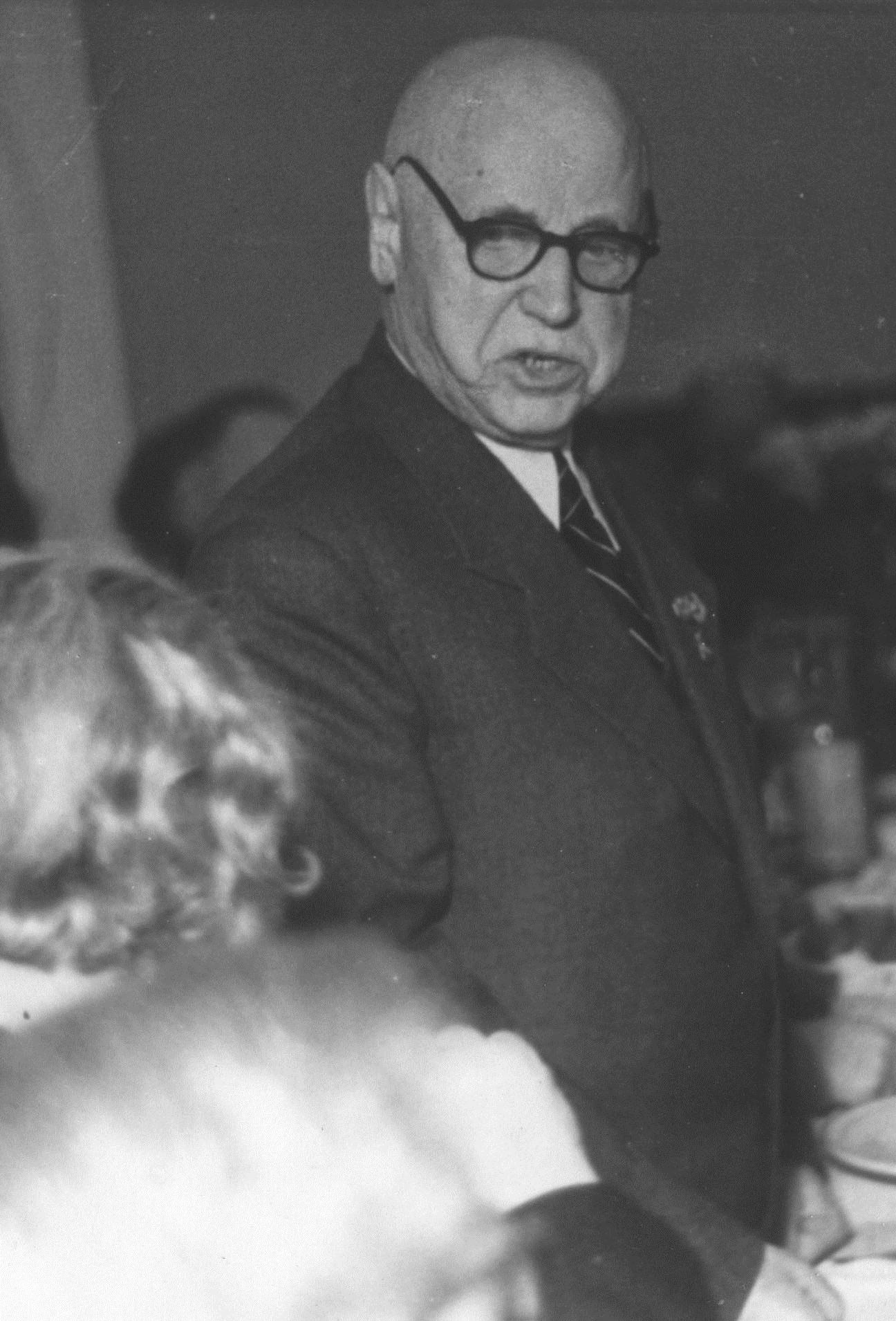
The created association and its bulletin, founded and edited at „Socola”, due to a prestigious scientific activity insures since 1920 the organization of a number of 18 congress. which will be mentioned in the description of the activity of Socola Hospital.
The first number of the Bulletin appeared in 1919 and was printed in Iaşi. Society’s monthly meetings were rich in clinical data and facts, as well as experimental. They constituted a sufficient material for a regular publication of the Bulletin of the Society.
Prof. Parhon, gradually gathered around him the youth willing to learn. The society became quickly a lively organism. At its meetings attended many doctors, young and old people attracted by the scientific level of the communications and discussions and also of the mutilaterallity of the scientific concerns of Professor C.I. Parhon. The fame of the society spread in the rest of the country too. This was an objective condition for organizing the congresses of Neurology, Psychiatry, Psychology and Endocrinology Society in our country. Each congress was held in another city, where there were hospitals with this profile.
The journal was sent in many countries: U.S.S.R., France, Germany, Italy, Austria, Sweden, Switzerland, UK, USA, Brazil, Argentina, Turkey and in other countries in Europe, in all 250 numbers of the journal were sent off. The journal was not subsidized by the state but once with the sum of 10.000 lei, after the attempt of the governors of the time to dissolve the „Socola” Hospital, for the progressive orientation of the comprised medical school. This attempt arose a great protest movement between the intellectuals and the doctors across the country, forcing the government of the time to reconsider this decision.
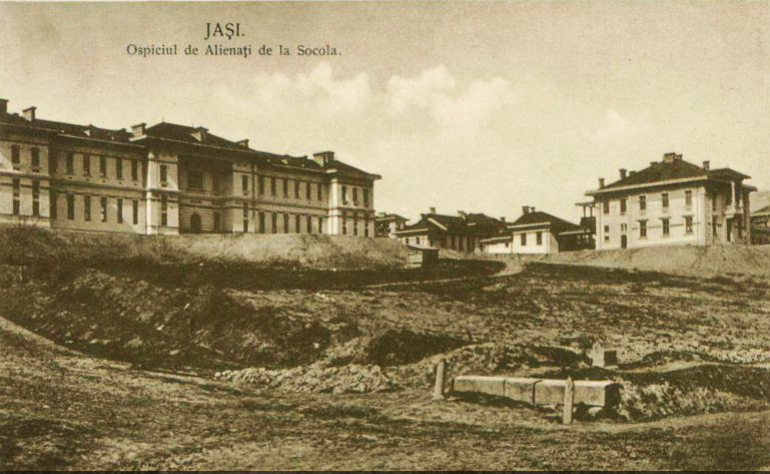
Since the appointment of professor C.I. Parhon as titular of the Clinic of nervous and mental diseases and as director of the hospital, the Socola Hospital became a brilliant center of worldwide reputation, tkanks to the enthusiasm, organizational ability, the high degree of human love and share of ideas of study whose pursuance was followed with great passion and strictness.
The last number of the Society’s Bulletin, which was edited in French was banned in 1947, because of the intolerance of the time and of the coercions imposed by the known extremist tendencies. For that matter, over time, precisely because of the humanist, medical and scientific valencies to the extremist tendencies of all „colors” and of all periods that succeeded between 1924 – 1925 and 1933 – 1940, the Socola Hospital itself was threatened with the dissolution. Since its appearance, from 1919 to 1947, the Society’s Bulletin added up a number of 2.412 articles. The journal or the Society’s Bulletin was named, in turn, “Bulletin et mémoires de la Societé de Neurologie, Psychiatrie et Psychologie de Iassy” between 1919 – 1922, then „Bulletin de l’Association des Psychiatrie Roumain” and since 1923 changed its title several times.
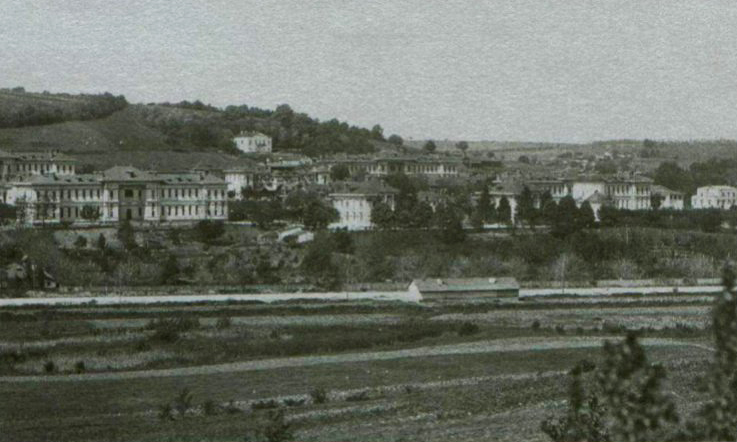
Of the 18 congresses organized by the „Society”, we enumerate: Cluj, 1920; Iaşi , 1921 (when it was put forward the protection of the mentally ill) Bucureşti, 1922; Sibiu 1924; Sighetul Marmaţiei, 1925; Chişinău, 1926; Lugoj, 1927; Oradea, 1928; Cernăuţi, 1929; Iaşi, 1930; San Martin, 1931; Bucureşti, 1936; Iaşi, 1937; Sibiu, 1938. The evolution of the congresses took place under the presidency of the medical director of the local hospital and of the primary doctors with the participation of the specialists in the country. The „Socola” Hospital continued this tradition over the years and continues it today, too.
As the „Society of Doctors and Naturalists”, the „Society of Neurology, Psychiatry and Endocrinology” in Iaşi has an important and valuable role for the cultural and scientific and medical elevation of our society, in which medical schools were structured and also, the progresses towards the future.
The informational, scientific and medical activity was further insured by the Society of Doctors and Naturalists of Iaşi.
In the enterprise of reanimating these traditions, it was restarted, in 1995 the editing of “Buletin de L’Association des Psychiatres Roumain” in the new series „Bulletin of Integrative Psychiatry”. In the intention of realising this Bulletin, there were designed the interdisciplinary researches on present day topics in mental pathology. It is noted, in editing this bulletin, a large clinical participation, with a good national and international audience, some articles being published in foreign languages.
The development of the information and of medical communication at national and international level with the projection and the achievement of some valuable scientific research, instructive, educational and formative activities, represents a genuine expression of the value of the school from Socola on its way to perenniality and modernity.